
Writers Lab: Creating Emotional Context
One Clear Moment in Time

Good afternoon, Lab Coats! How is it Friday again already?
Yesterday was my birthday. I celebrated it with a pinestraw delivery for my garden beds and tree guilds, and a visit from family that included a few simple, thoughtful presents, chocolate cake, fried chicken, and a rousing game of dominoes, which I lost, as usual.
There were also baked beans that I left in the cooling oven and forgot to bring out for our meal.
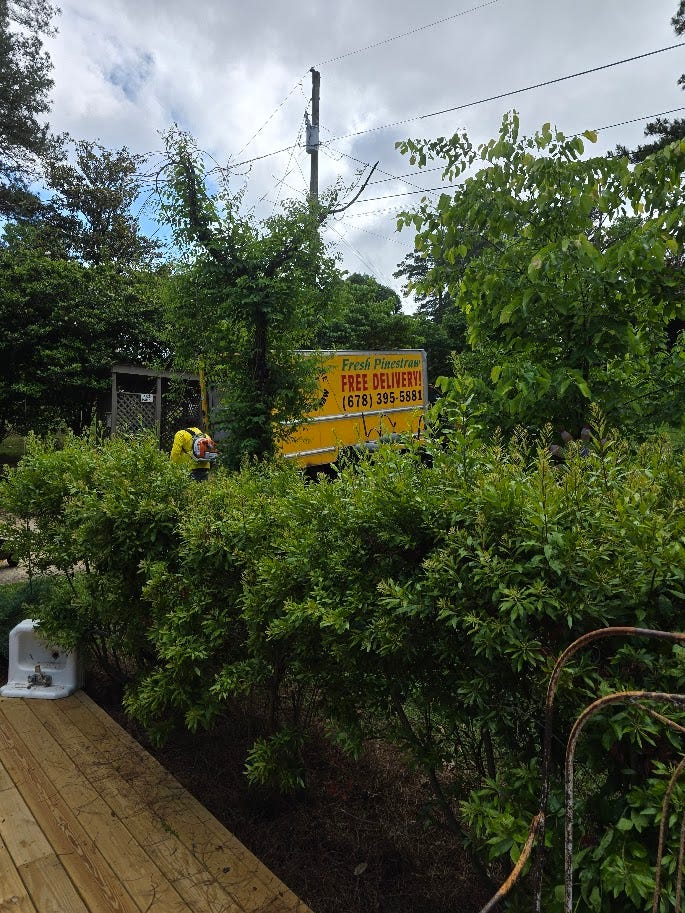
But, of course, I won the day. What richness.
Later, after the pinestraw people had done their beautiful work, and family had done their beautiful work, and the house settled into evening and sleep, I thought about the context of my life and of the perspectives through which I’ve viewed it over long years’ time, and how both have changed.
I thought about how meaning accumulates around ordinary things: gardens, meals, family stories, familiar voices, the clatter of dishes, the taste of chocolate cake and lemon bars, the sound of laughter, and remembering those we miss.


Then, this morning, I found this short film on YouTube — 10 minutes of your time — that I would love you to watch this week. It will tie into the Exercise I’ve got for you this week, which you’ll find after the break, below.
I will confess, this little film made me teary, maybe because of the reflective mood I was in, but I thought of y’all immediately, Lab Coats.
Creating Emotional Context
Ever since I learned to read like a writer (still learning), I cannot read a book without considering the structural choices that go into its making. The same holds for film. It teaches me so much. I’m convinced I’m a better writer for studying the way films tell stories.
For one thing, they teach me what can be shown instead of told. But they also are a showcase for the ways dialogue, gesture, silence, expression, movement, objects, food, setting, and memory all work together to create emotional context for the viewer.
This little film, “The Kitchen Garden,” is rich with implied backstory and emotional architecture. I felt the lived history between two characters who had never met before this moment, and their story connected me to my own lived history.
Woven through this film are grief and tenderness. Family inheritance. Illness and caretaking. Memories held in food. The presence of another generation just outside the frame. The legacy passed from one generation to the next through ordinary acts of care.
And that, to me, is the difference between explaining context and creating context.
One Clear Moment in Time
The film stays tightly contained in one clear moment in time, but the world around that moment feels enormous. The filmmakers trust us to assemble meaning through accumulation: a look, a pause, a recipe, a garden, a routine, a silence.
As writers, that’s worth studying. And, as we know, what we study informs our work.
What details in our own stories act as context carriers? What objects, gestures, sensory details, or fragments of dialogue reveal history without explaining it outright? What can we allow the reader to infer? How can we draw them into our world?
Yesterday, on my birthday, I found myself thinking about the hard work families do to stay connected to one another’s lives through all the complicated layers of love, hope, distance, and disappointment. How forgiveness and tenderness can become part of family history over time. How, at our best, we keep showing up for one another. And how, sometimes, at our best, we can’t.
Joy and ache together. Gratitude and loss together. Memory and presence together. Who we were and who we are now, sitting at the same table.
Our lives are more layered than we realize, both individually and collectively. Which is one reason I treasure the Writers Lab, this writing community, here at Storybelly.
Then here comes this little film that encapsulates all these layers in a ten-minute story. Masterful.
Below the jump is your Assignment for the week (or for whenever, no pressure; come to it when you are ready).
After you watch it, tell me in the comments or in Chat: what do you think of this film? What can you glean from it for your own process? You might read the description box, too, which includes context from the filmmaker about why and how the film was made.